
KNEE & LOWER LEG
Lower-Leg Pain & Foot-Driven Knee Pain — Podiatry Care in Surprise, AZ
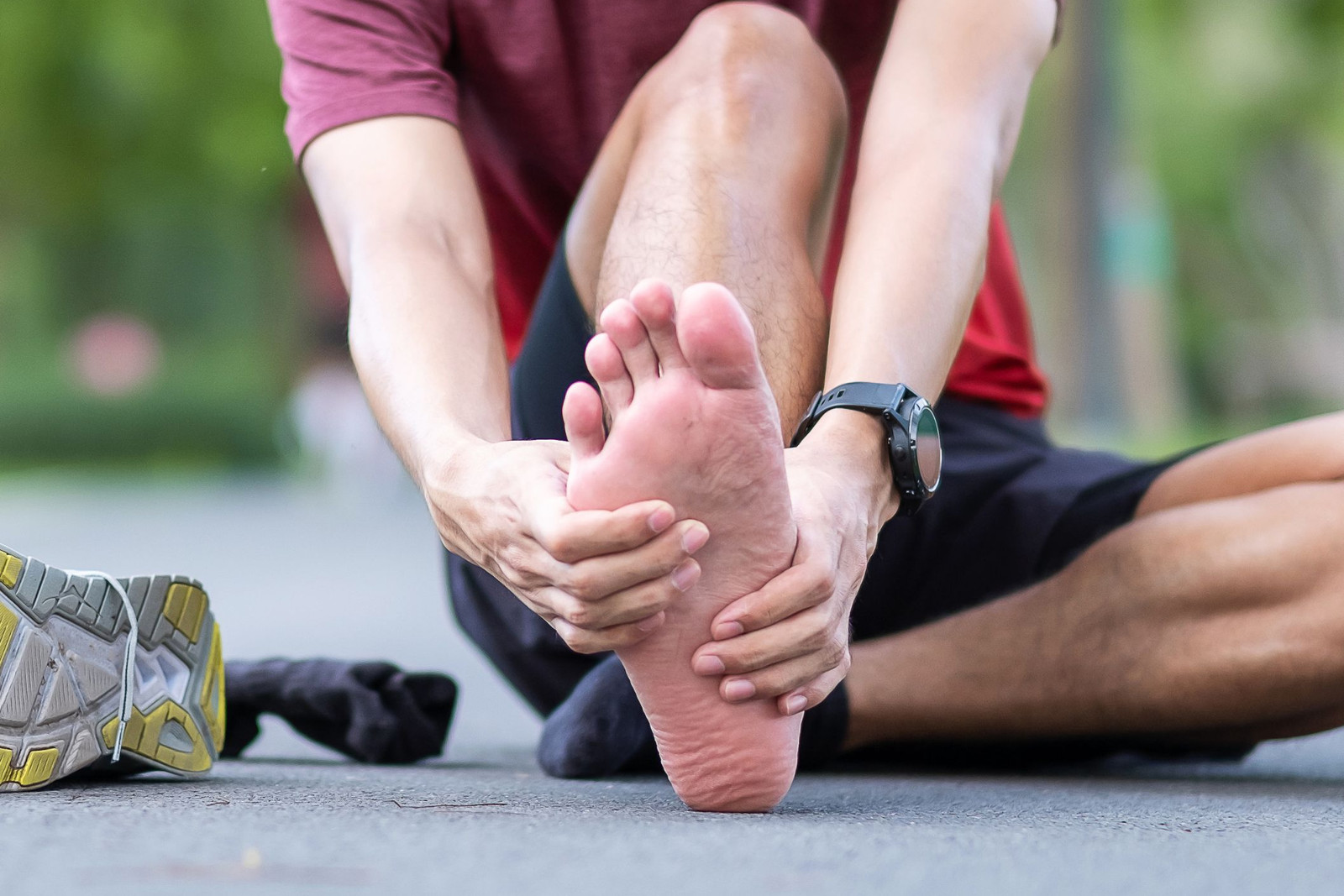
Lower-leg pain, and knee pain that is being driven from the foot, frequently begin further down than where they hurt. The way your foot strikes the ground sets the angle and load that travels up through the shin to the knee, which is why a flat foot, a high arch, or a stiff big toe can show up as leg or knee pain. Arizona podiatric practice covers the foot and the leg below the knee, so both can be assessed as one system rather than two appointments.
Make an AppointmentKnee pain is not always a knee problem. How your foot loads the ground determines how force travels up the leg, and a foot that pronates, a stiff big toe, or a tight calf will change what the knee absorbs with every step. Assessing the foot and the leg together often explains a knee that has not responded to knee-only treatment.
Common signs
- Aching in the knee or shin that is worse after standing or walking
- Knee pain on one side that matches the foot that pronates or hurts
- Calf tightness or lower-leg fatigue by the end of the day
- Knee pain that has not improved despite treatment aimed only at the knee
What usually helps
- Custom orthotics to change how load travels up the leg
- Footwear that controls foot motion rather than just cushioning it
- Calf and lower-leg stretching and strengthening
- Gait assessment to find what the knee is compensating for
Knee or lower-leg pain that has not improved? Tell us what you are feeling and where — the foot is often part of the answer.
Why the foot drives knee and lower-leg pain
Every step sends force from the ground up through the foot, the shin, and into the knee. The foot decides the angle and timing of that force. A foot that rolls inward too far rotates the shin inward with it, changing how the kneecap tracks and how load is shared across the joint. A stiff big toe changes how you push off, which shifts load to the outside of the foot and up the outside of the leg. A tight calf increases the force the knee absorbs at heel strike. None of this is visible if only the knee is examined.
Knee osteoarthritis
Osteoarthritis of the knee is the gradual thinning of the cartilage lining the joint, producing a deep ache, stiffness after sitting, swelling after activity, and pain that is worse on stairs. It is strongly influenced by alignment and load, which is where foot mechanics matter: changing how the foot loads the ground changes what the knee absorbs, and offloading through footwear and orthotics is a well established conservative measure.
To be clear about who does what: Arizona podiatric practice covers the foot and the leg below the knee. Care directed at the knee joint itself is not podiatric work. Dr. Bates addresses the foot and lower-leg mechanics feeding the problem; knee-joint care is handled by a physician — either at our sister clinic or with an orthopedic specialist.
Lower-leg tendon and muscle pain
Several of the muscles and tendons that control the foot originate in the lower leg. When the foot is working hard to compensate for its own mechanics, those structures fatigue and become painful — producing calf tightness, shin pain, and posterior tibial pain along the inside of the leg. Treating the foot mechanics usually settles the leg, because the leg was only ever doing extra work.
How knee and lower-leg pain is treated here
The approach is mechanical and conservative first:
- Gait and alignment assessment — what the foot is doing, and what the leg is compensating for.
- Custom orthotics — prescribed to change load through the leg, not simply to cushion the foot.
- Footwear guidance — motion control versus cushioning, chosen for your specific mechanics.
- Stretching and strengthening — particularly the calf, which drives a large share of lower-leg and knee load.
- Anti-inflammatory measures for a painful flare.
⚕️ What we handle, and when we coordinate
Being straightforward about this matters. Arizona defines podiatric practice as the foot and the leg between the knee and the foot. That is the work Dr. Bates does: the mechanical drivers — how the foot loads, what the lower leg compensates for, and what orthotics and footwear can change. Treatment aimed at the knee joint itself sits outside that scope, and we do not pretend otherwise. Where a knee needs intra-articular management, imaging beyond our scope, or a surgical opinion, we say so and coordinate with a physician or orthopedic specialist. You get a straight answer about which of those you are.
When knee pain has lasted months
Chronic knee osteoarthritis that has been managed for months — anti-inflammatories, injections, physical therapy, orthotics — and still limits walking, stairs, or sleep, is a different conversation from a knee that just started hurting.
Heelex is set up for that situation. Our sister clinic offers Low-Dose Radiation Therapy (LDRT) for chronic knee osteoarthritis — a non-surgical option, delivered under a physician rather than as podiatric care, that targets the inflammation driving the pain. It is not right for everyone and it does not rebuild cartilage. But when conservative care has genuinely been exhausted and the alternative discussion is surgery, it is worth understanding first. The consult is where we work out whether it fits you.
What happens at your first visit
We watch you walk, examine the foot and the leg together, and identify what is driving the load pattern. If imaging will change the plan we obtain it. You leave understanding whether your knee pain is being driven from below, and what can be changed about it.
How long it takes
Mechanical changes take a few weeks to show their full effect, because the tissue has to adapt to a new load pattern. Most patients notice a difference within two to four weeks of wearing a properly prescribed orthotic consistently.
Contact us to schedule an evaluation.